
 English



A poorly designed shaft doesn't just fail. It takes the entire system down with it. Whether you're spec'ing a drive shaft for an automotive assembly or engineering a precision shaft for aerospace, the margin for error is razor-thin. One wrong material choice, one overlooked tolerance, and you're looking at costly downtime.
This guide covers everything you need to get it right:
● What a shaft actually is (and isn't)
● How to design a shaft for your specific application
● Materials, tolerances, and custom shaft fitting
● Manufacturing methods: casting, CNC machining, and more
● How to choose the right custom shaft manufacturer
At TEAM MFG, we manufacture precision shafts for industries ranging from automotive to aerospace. With over 15,000 projects completed across 73 countries, we know what it takes to get custom parts right the first time.
At its core, a shaft is a rotating mechanical component, typically circular in cross-section, designed to transmit power and rotational motion from one part of a machine to another. That's the textbook shaft definition. But in practice, it's a lot more nuanced than that.
Think of a shaft as the backbone of any rotating system. Without it, gears don't turn. Pulleys don't spin. Engines don't drive wheels. Every motor, pump, gearbox, and turbine you've ever seen relies on at least one shaft to function.
Shafts carry a combination of loads during operation, including:
● Torsional stress from transmitting torque
● Bending stress from mounted components like gears and pulleys
● Axial loads in certain configurations where thrust forces are present
That's what makes shaft design so critical. A shaft isn't just a metal rod. It's an engineered component that must handle complex, simultaneous forces while maintaining structural integrity at high speeds.
People mix these terms up all the time, and in manufacturing, that confusion can lead to costly spec errors. Here's how they differ:
Component | Rotates? | Transmits Torque? | Primary Function |
Shaft | Yes | Yes | Transmits power and motion between machine elements |
Axle | Sometimes | Rarely | Supports rotating parts like wheels; mainly a bending member |
Spindle | Yes | Minimal | Short, high-precision shaft for machine tools; prioritizes accuracy over power |
The key takeaway: if it rotates and transmits torque, it's a shaft. If it primarily supports load, it's likely an axle. And if it demands extreme precision and high RPM with minimal runout, you're looking at a spindle.
Not all shafts serve the same purpose. The type you need depends entirely on the application, load conditions, and the system it operates in.
● Transmission shafts are the workhorses. They transfer power between a source (like a motor) and the machine absorbing that power. Countershafts and line shafts both fall into this category. You'll find them in gearboxes, conveyors, and industrial drive systems.
● Machine shafts go a step further. They're not just power carriers; they're integral structural components of the machine itself. A crankshaft in an internal combustion engine is a perfect example. It converts reciprocating piston motion into rotary motion while handling extreme torsional and bending loads.
● Flexible shafts solve a specific problem: transmitting rotational motion where rigid shafts simply can't go. Made from coiled or braided metal wires, they can bend and twist while still delivering torque. You'll see these in tight spaces or where misalignment between components is unavoidable.
● Spindle shafts prioritize precision over raw power. They're short, they spin fast, and they hold cutting tools or workpieces in machines like lathes and milling centers. Hardened steel construction is standard here because vibration control and surface finish tolerances are non-negotiable.
This is a design decision that comes down to weight, strength, and application.
A solid shaft is simpler to manufacture and cost-effective for most standard applications. It handles combined bending and torsional loads well and is the default choice for moderate-duty systems.
A hollow shaft, on the other hand, offers a better strength-to-weight ratio. Most of a shaft's torsional stiffness comes from the material furthest from the center, so removing the core doesn't sacrifice as much strength as you'd expect. Hollow designs are common in aerospace, automotive, and high-speed rotating equipment, where every gram counts.
Pro tip: If weight reduction is a priority but you still need high torsional strength, a hollow shaft with the right wall thickness can match a solid shaft's performance at a fraction of the weight. The trade-off is a more complex and precise manufacturing process.
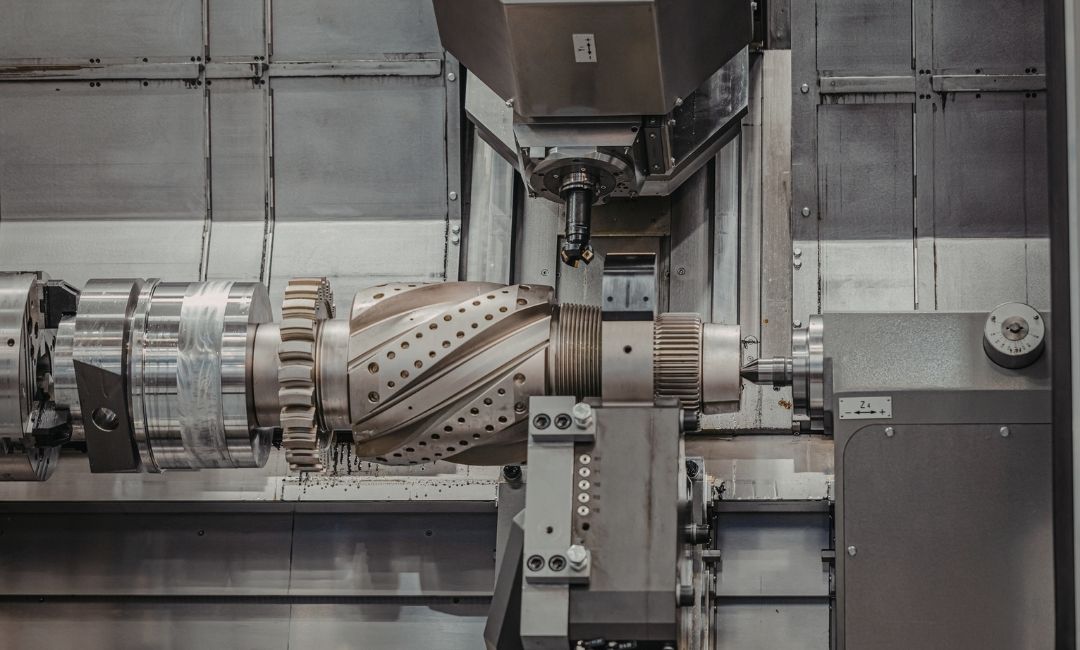
This is where working with the right custom shaft manufacturer matters. Precision shaft production, whether solid or hollow, requires tight control over tolerances, material consistency, and machining quality. At TEAM MFG, our CNC machining services deliver shaft tolerances as tight as ±0.01mm, which is the kind of accuracy that prevents vibration issues and premature wear down the line.
Shaft design isn't guesswork. It's a structured engineering process that balances mechanical performance, manufacturability, and cost. Get the design wrong, and you're looking at premature fatigue failure, excessive vibration, or a shaft that simply can't handle the loads your system demands.
Before you open CAD software or start crunching numbers, you need to answer a few fundamental questions about your application.
Every shaft design begins with understanding the forces acting on it. You need to identify three primary load types:
● Torsional loads from the torque being transmitted
● Bending loads from mounted components like gears, pulleys, and sprockets
● Axial loads from thrust forces in certain configurations
These forces rarely act in isolation. In most real-world applications, your shaft will experience combined loading, meaning torsion and bending happening simultaneously. This is where things get interesting, and where bad designs start to fall apart.
Pro tip: Always map out every force acting on the shaft before sizing it. Sketch a free-body diagram showing the location, direction, and magnitude of each load. Skipping this step is one of the most common (and expensive) mistakes in shaft design.
Once you understand your loads, a handful of structural principles will guide the rest of the design process:
● Keep it short. The shorter the shaft, the lower the deflection and bending moments. Position bearing supports as close to the applied loads as possible. This also raises the critical speed, which matters a lot for high-RPM applications.
● Minimize stress concentrations. Every keyway, groove, shoulder, and sharp corner on a shaft acts as a stress raiser. Place them away from high-stress zones whenever possible, and always use generous fillet radii at transitions between diameters.
● Design for fatigue, not just static strength. Static load calculations tell you if the shaft can handle a single application of force. But most shafts endure millions of load cycles over their lifetime. If you're not designing with the endurance limit in mind, you're designing for failure.
● Use stepped diameters strategically. A stepped shaft makes it easier to locate and secure bearings, gears, and other components. But each step creates a shoulder that can concentrate stress. The trade-off is worth it when done right, because stepped shafts distribute loads more efficiently than constant-diameter designs.
If you're approaching shaft design for a new project, here's a practical sequence that works:
Define the power and RPM requirements of your system
Calculate the torque using the relationship: Power = Torque × Angular Velocity
Create a free-body diagram and determine bending moment distributions
Select a preliminary material based on strength, cost, and environment
Calculate the minimum shaft diameter using combined stress equations (von Mises or Tresca criteria)
Verify deflection and critical speed are within acceptable limits
Add features like keyways, splines, and shoulders for component mounting
Iterate and refine based on shaft tolerance requirements and manufacturing constraints
Hand calculations get you started, but Finite Element Analysis (FEA) takes shaft design to the next level. FEA software lets you simulate complex loading scenarios, visualize stress distributions, and identify weak points before a single part gets machined.
Popular tools for shaft design include SolidWorks Simulation, ANSYS, and Autodesk Fusion. These platforms allow you to test different materials, geometries, and load cases digitally, saving significant time and cost during prototyping.
For engineers working on custom shafts, this is where the handoff between design and manufacturing becomes critical. TEAM MFG's engineering team works directly with clients during the design phase, offering DFM (Design for Manufacturability) feedback that helps optimize shaft geometry for CNC machining before production begins. That kind of early collaboration prevents costly revisions later.
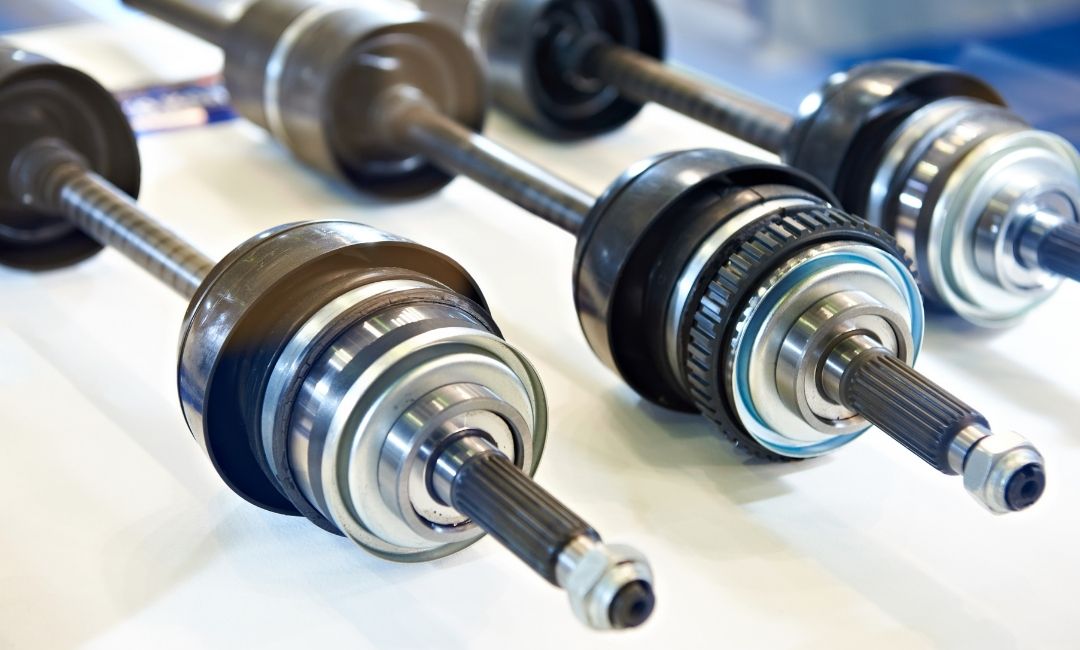
Choosing the right material for your shaft isn't just about strength. It's about matching mechanical properties to your specific operating environment, load conditions, and budget. And once the material is locked in, the tolerances and fitting strategy you specify will determine whether your shaft assembly performs reliably or fails prematurely.
The material you select affects everything: strength, weight, machinability, corrosion resistance, fatigue life, and cost. Here's a breakdown of the most commonly used shaft materials and where each one excels.
Material | Key Properties | Best For | Trade-Offs |
Carbon Steel (1040, 1045, 1050) | Good strength, affordable, easy to machine | General-purpose shafts, moderate loads | Limited fatigue resistance vs. alloy steels |
Alloy Steel (4140, 4340, 42CrMo4) | High strength, excellent fatigue resistance | Heavy-duty, high-torque applications | Higher cost, harder to machine |
Stainless Steel (303, 304, 316) | Corrosion resistant, good mechanical properties | Marine, food processing, chemical environments | More expensive, slower machining speeds |
Aluminum (6061-T6, 7075) | Lightweight, good strength-to-weight ratio | Aerospace, weight-sensitive applications | Lower fatigue strength than steel |
Titanium (Ti-6Al-4V) | Exceptional strength-to-weight, corrosion resistant | Aerospace, high-performance systems | Very expensive, long machining times |
Brass/Bronze | Good machinability, wear-resistant, antimicrobial | Low-load, precision, or self-lubricating applications | Not suitable for high-torque use |
Carbon steel is the go-to for most standard shaft manufacturing. Grades like 1045 offer a solid balance of strength and machinability at a reasonable price point. Cold-rolled carbon steel shafts come out stronger than hot-rolled variants, with yield strengths around 70,000 PSI, but they carry higher residual stresses that can cause warping during machining if not managed properly.
Alloy steels step in when the demands get heavier. Grades like 4140 and 4340 respond well to heat treatment (quenching and tempering), significantly boosting strength and fatigue resistance. If your shaft needs to handle high cyclic loads in demanding environments, alloy steel is usually the answer.
Stainless steel makes sense when corrosion is a real threat. Type 304 offers superior corrosion resistance for marine or chemical applications, while 303 provides better machinability when environmental exposure is less severe.
Don't over-spec your material. Engineers sometimes default to aerospace-grade alloys for industrial applications where carbon or alloy steel would perform equally well at a fraction of the cost. Match the material to the actual operating conditions, not a worst-case scenario that will never happen.
Shaft tolerance refers to the permissible deviation from a shaft's nominal dimension. It sounds like a small detail. It's not. Tolerances directly impact how a shaft interfaces with bearings, gears, couplings, and housings. Get them wrong, and you'll deal with excessive vibration, premature bearing wear, or components that simply won't assemble.
The ISO 286 standard governs tolerance grades for shafts, using a letter-number system. The letter indicates the position of the tolerance band relative to the nominal size, while the number indicates the width of that band (the IT grade).
Here's what that looks like in practice for common shaft fits:
Fit Type | ISO Designation | Description | Common Applications |
Clearance fit | H7/g6 | Shaft is always smaller than the hole | Rotating shafts, pulleys, sliding joints |
Transition fit | H7/k6 | May have slight clearance or interference | Dowel pins, bearing seats, alignment-critical assemblies |
Interference fit | H7/p6 | Shaft is always larger than the hole; press or heat required | Gears, hubs, press-fit bearings |
A few things to keep in mind:
● As nominal diameter increases, the tolerance band widens, even for the same fit designation
● Tighter tolerances (IT5, IT6) demand more precise machining processes like grinding or honing
● Looser tolerances (IT9 and above) are fine for general industrial use, but won't cut it for precision shaft applications
Custom shaft fitting is where design meets reality. The fit you specify determines how your shaft connects to every mating component in the system. And the type of fit you choose depends entirely on whether those components need to move, stay locked in place, or fall somewhere in between.
● Clearance fits allow free rotation or sliding. Think of a shaft spinning inside a journal bearing. There's always a gap between the shaft and the bore, and that gap is intentional. It allows for lubrication, thermal expansion, and smooth operation.
● Interference fits do the opposite. The shaft is deliberately oversized relative to the bore, so assembly requires a hydraulic press or thermal expansion. Once assembled, the friction between surfaces holds everything in place. This is standard for mounting gears and hubs that must not slip under load.
● Transition fits land in the middle. There might be a tiny clearance or slight interference depending on where the actual dimensions fall within the tolerance bands. These are common for components that need precise alignment but also need to be disassembled for maintenance.
Material and tolerances only tell part of the story. The surface finish of a precision shaft directly affects friction, wear, and fatigue life. A rough surface creates micro-level stress concentrations that accelerate crack initiation under cyclic loading.
Common finishing processes for custom shaft manufacturing include:
● Grinding for achieving tight dimensional tolerances and smooth surfaces
● Polishing for applications requiring minimal friction
● Hard chrome plating for enhanced wear and corrosion resistance
● Induction hardening to increase surface hardness while maintaining a ductile core
● Nitriding for improved fatigue resistance without distortion
The right combination of material, tolerance, and surface treatment depends on your specific application. This is where partnering with a manufacturer who understands the full picture makes a real difference.
TEAM MFG's precision CNC machining capabilities handle shaft tolerances down to ±0.01mm with surface roughness as fine as Ra 0.2μm, backed by quality control at every stage of production, from incoming material inspection through final dimensional verification.
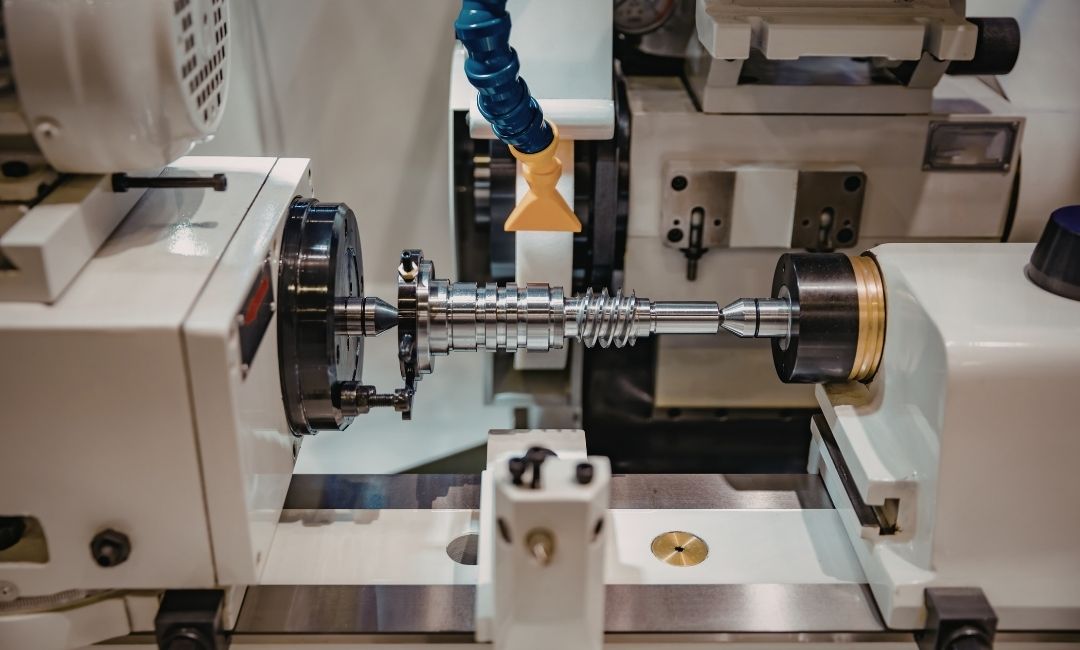
The way a shaft is manufactured directly shapes its strength, precision, and cost. Each method has a sweet spot, and picking the wrong one for your application is a fast track to wasted budget or underperforming parts.
Shaft casting involves pouring molten metal into a mold shaped to the desired geometry. Once cooled, the rough shaft is removed and machined to final dimensions. This method works well for complex shapes and large production volumes where extreme precision isn't the primary concern. The trade-off? Cast shafts can contain internal defects like porosity, making them less reliable under high cyclic loads.
Forging uses compressive force to shape heated metal, aligning the grain structure along the shaft's axis. The result is significantly stronger and more fatigue-resistant than cast alternatives. If you're building shafts for automotive crankshafts, turbine assemblies, or aerospace systems, forging is typically the go-to.
This is where raw stock becomes a precision shaft. CNC turning, milling, and grinding remove material with extreme accuracy, creating features like stepped diameters, keyways, splines, and threads. For tight-tolerance work, CNC machining is non-negotiable.
● Hot rolling produces long shafts quickly and affordably, but requires secondary machining for precision
● Cold drawing improves surface finish and dimensional accuracy by pulling material through a die
● Extrusion creates uniform cross-section shafts efficiently for high-volume runs
Most precision shafts go through a combination of these processes. A shaft might start as a forged blank, get rough-turned on a CNC lathe, undergo heat treatment, and then receive final grinding for surface finish and tolerance. TEAM MFG handles this entire workflow in-house, from blank preparation through final quality inspection, which keeps lead times short and eliminates the coordination issues that come with multi-vendor production chains.
Not every shop that owns a lathe can produce a reliable precision shaft. The difference between a good manufacturer and the wrong one shows up in rejected parts, missed deadlines, and assemblies that fail in the field.
Here's what to evaluate:
● Multi-process coverage: Look for a manufacturer that handles CNC machining, grinding, heat treatment, and surface finishing under one roof. Splitting these across vendors adds cost, lead time, and quality risk.
● Material expertise: Your manufacturer should source and work with a range of metals, from carbon steel to stainless to aluminum, and advise on the best fit for your application.
● Tolerance range: If your shaft demands ±0.01mm accuracy or surface finishes below Ra 0.2μm, verify the shop can consistently deliver at that level.
An ISO 9001 certification isn't just a badge. It means the manufacturer has documented processes for incoming material inspection, in-process monitoring, and final verification. Ask about their quality control workflow. If they can't explain it clearly, that's a red flag.
The best shaft manufacturers don't just take your drawing and disappear. They offer DFM feedback, flag potential issues before production, and assign a dedicated point of contact for your project. That level of support prevents surprises.
Pro tip: Request sample parts or reference projects before committing to a large order. A manufacturer confident in their work will have no problem proving it.
TEAM MFG checks every one of these boxes. With ISO 9001 certification, dedicated one-on-one project contacts, and over 15,000 completed projects across 73 countries, they've built their reputation on delivering custom shafts that meet spec, on time, every time.
Shafts sit at the heart of nearly every mechanical system you'll encounter. Getting the design, material, and manufacturing process right isn't optional. It's the difference between a machine that runs reliably for years and one that grinds to a halt when you can least afford it.
Here are the key takeaways to keep in mind:
● A shaft transmits torque and rotational motion; don't confuse it with an axle or spindle
● Always start design with a thorough load analysis before sizing or selecting materials
● Carbon steel covers most applications, but alloy and stainless steels step in when demands increase
● Shaft tolerance and custom shaft fitting directly determine how your assembly performs
● CNC machining delivers the precision that casting and forging alone cannot
● Choose a custom shaft manufacturer with multi-process capabilities and proven quality systems
Whether you're prototyping a single precision shaft or scaling into full production, TEAM MFG brings the entire custom shafts manufacturing process under one roof. With CNC machining accuracy down to ±0.01mm, ISO 9001 certification, and a dedicated engineering team ready to support your next project, getting started is as simple as requesting a free quote