
 English


The aerospace industry includes all types of air traffic, from large Boeing 747 jets carrying hundreds of passengers to spacecraft rockets designed to explore the International Space Station, the moon and even Mars. The spacecraft are designed to stay in outer space for months or even years. Given this long-term maintenance, they must be developed with incredible accuracy and precision. In this context, computer numerical control (CNC) is increasingly suited to this field.
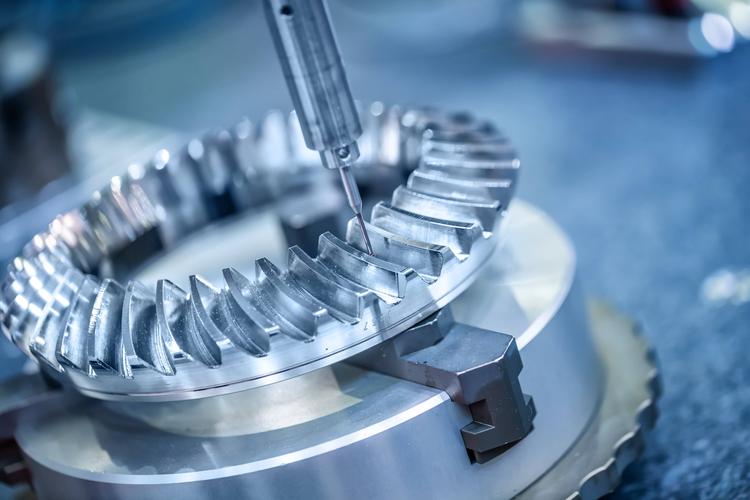
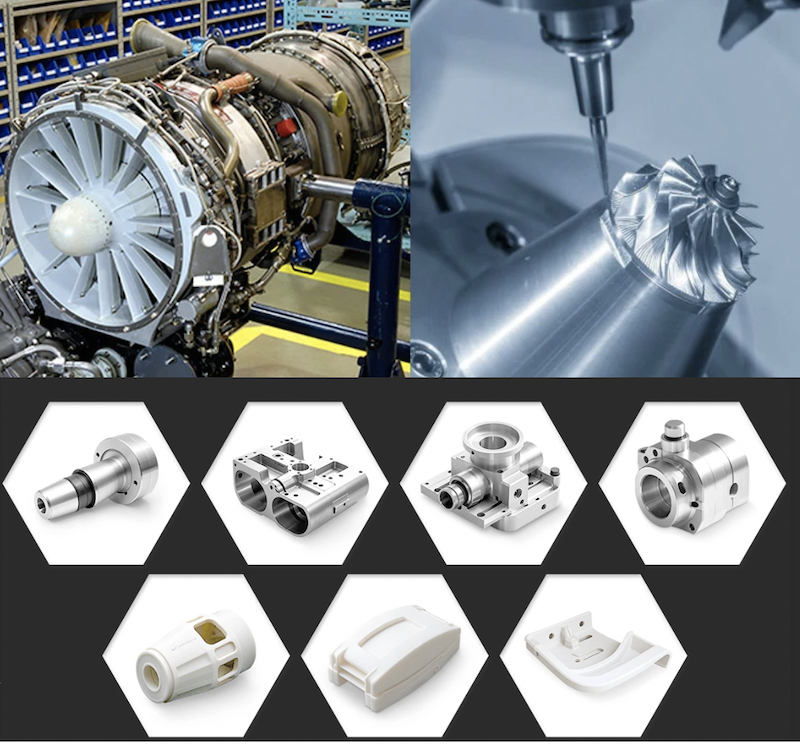
Aerospace CNC machining is used to manufacture assembly and maintenance parts for aircraft and space shuttles. In the aerospace industry, aircraft typically require CNC machined parts, sets and assemblies. Aerospace equipment and aircraft components require the best parts to make hinges, bushings, valves, fixtures or other custom parts in the highest quality metals. Titanium and fungible alloys are most commonly used for aerospace components, but other parts include stainless steel, inconel, aluminum, brass, bronze, ceramics, copper and other specific types of plastics.

A key part of aerospace engineering is material selection. Aerospace manufacturing requires materials with superior strength, reliability and wear resistance to ensure they are ready for changing conditions and demanding structural loads. The following are some of the materials required for aerospace machining.
Stainless steel is a viable alloy material for a variety of aerospace components and has been used in aerospace applications for decades. Stainless Steel
Stainless steels are resistant to corrosion and high temperature oxidation because their chromium content produces a rich oxide film. Common aerospace applications for stainless steel include fuel tanks, exhaust components, aircraft panels, high-temperature engine components and parts that require welding.
Aluminum has always been a major material for the aerospace industry. This metal is almost one-third the weight of stainless steel, contributes to fuel efficiency and weight savings, and is often cheaper and easier to work with. However, it is also a more efficient thermal conductor and therefore not suitable for parts that require higher heat resistance and are more difficult to weld. As technology evolves, other alloys (and composites) may replace aluminum as the primary aerospace material, but it still has applications in today's industry.
The aerospace industry is now leading the way in the use of titanium alloys because of its incredible strength-to-weight ratio. This metal is an attractive choice for aerospace engineering because it is lighter than aluminum, but has impressive heat and corrosion resistance. Its excellent resistance occurs when treated with carbon fiber reinforced polymers (CFRPS). From frames to engines, manufacturers see titanium as the ideal solution for complex aerospace processes.
These super alloys, metal alloys, are characterized by their heat and corrosion resistance, lightweight construction and high strength. Superalloys are often the best choice for the hottest parts of jet engines, turbine and compressor stages. Some of the superalloys we use are nickel superalloys, cobalt superalloys, and iron superalloys.
| Category | Aerospace Part | Typical Materials | Common Manufacturing Methods | Typical Tolerances | Typical Post-Finishing |
|---|---|---|---|---|---|
| Structural Components | Fuselage panels, frames | Aluminum alloys, Titanium, Composites | CNC milling, Sheet metal forming, Composite layup | ±0.1–0.5 mm | Anodizing, Painting, Surface polishing |
| Wing spars, ribs | Aluminum, Titanium, Composites | CNC machining, Forging, Composite layup | ±0.05–0.3 mm | Anodizing, Heat treatment, Coating | |
| Tail assemblies | Aluminum, Composites | CNC machining, Composite molding | ±0.1–0.3 mm | Painting, Surface finishing | |
| Bulkheads, stringers | Aluminum, Titanium | CNC milling, Sheet metal forming | ±0.1–0.5 mm | Anodizing, Painting | |
| Landing gear brackets | Steel, Titanium | CNC turning/milling, Forging | ±0.02–0.1 mm | Heat treatment, Plating | |
| Engine & Propulsion | Turbine blades, vanes | Nickel-based superalloys, Titanium | Precision casting, CNC machining | ±0.01–0.05 mm | Polishing, Coating (thermal barrier) |
| Compressor disks & casings | Titanium, Nickel alloys | CNC machining, Forging | ±0.02–0.05 mm | Heat treatment, Coating | |
| Exhaust nozzles | Nickel alloys, Titanium | Casting, CNC machining | ±0.02–0.1 mm | Polishing, Thermal coating | |
| Fuel injection systems | Stainless steel, Titanium | CNC turning/milling, Additive manufacturing | ±0.01–0.05 mm | Surface finishing, Plating | |
| Engine mounts | Steel, Aluminum | CNC milling, Fabrication | ±0.05–0.2 mm | Painting, Coating | |
| Avionics & Electrical | Circuit boards & connectors | FR4, Aluminum, Plastics | CNC milling, Injection molding | ±0.05–0.1 mm | Plating (gold/tin), Coating |
| Sensor housings | Aluminum, Titanium, Plastics | CNC machining, Die casting | ±0.02–0.1 mm | Anodizing, Painting | |
| Antennas & radomes | Composites, Plastics | Composite molding, CNC machining | ±0.05–0.2 mm | Painting, Surface coating | |
| Electrical panels | Aluminum, Steel | CNC milling, Sheet metal forming | ±0.05–0.2 mm | Powder coating, Painting | |
| Wiring harness brackets | Aluminum, Plastic | CNC machining, Injection molding | ±0.05–0.2 mm | Anodizing, Painting | |
| Hydraulic & Pneumatic | Actuators & servo components | Aluminum, Steel, Titanium | CNC machining, Casting | ±0.01–0.05 mm | Plating, Anodizing, Heat treatment |
| Hydraulic pumps & valves | Steel, Aluminum | CNC machining, Precision casting | ±0.01–0.05 mm | Surface finishing, Coating | |
| Fluid reservoirs & fittings | Aluminum, Stainless steel | CNC machining, Casting | ±0.02–0.1 mm | Anodizing, Plating | |
| Landing gear cylinders | Steel, Titanium | CNC machining, Honing | ±0.01–0.03 mm | Polishing, Heat treatment | |
| Brake assemblies | Steel alloys | CNC machining, Casting | ±0.01–0.05 mm | Heat treatment, Coating | |
| Interior & Cabin | Seat frames & tracks | Aluminum, Steel | CNC machining, Sheet metal forming | ±0.05–0.2 mm | Painting, Powder coating |
| Overhead bins, panels | Composites, Aluminum | Composite molding, CNC machining | ±0.1–0.3 mm | Painting, Surface finishing | |
| Air ducts & vents | Aluminum, Plastics | CNC machining, Injection molding | ±0.05–0.2 mm | Anodizing, Painting | |
| Galley & lavatory fittings | Stainless steel, Aluminum | CNC machining, Sheet metal forming | ±0.05–0.2 mm | Polishing, Coating | |
| Cabin lighting housings | Aluminum, Plastics | CNC machining, Injection molding | ±0.05–0.2 mm | Anodizing, Painting | |
| Fasteners & Hardware | Bolts, nuts, washers | Titanium, Stainless steel | CNC turning, Forging | ±0.01–0.05 mm | Passivation, Plating |
| Rivets | Aluminum, Steel | Cold heading, Forming | ±0.01–0.03 mm | Anodizing, Plating | |
| Pins & clips | Steel, Titanium | CNC turning, Stamping | ±0.01–0.05 mm | Heat treatment, Plating | |
| Locking devices | Stainless steel | CNC machining | ±0.01–0.05 mm | Passivation, Coating | |
| Landing Gear & Flight Control | Landing gear struts, doors | Steel, Titanium | CNC machining, Forging | ±0.01–0.05 mm | Heat treatment, Plating |
| Control linkages & rods | Aluminum, Steel | CNC turning/milling | ±0.01–0.05 mm | Anodizing, Coating | |
| Flap & aileron brackets | Aluminum, Titanium | CNC machining | ±0.02–0.05 mm | Anodizing, Coating | |
| Rudder & elevator control systems | Aluminum, Steel | CNC machining | ±0.02–0.05 mm | Anodizing, Coating | |
| Miscellaneous High-Performance | Heat shields, insulation panels | Composites, Ceramics | CNC machining, Molding | ±0.05–0.2 mm | Coating, Painting |
| Composite fairings, covers | Carbon fiber, Fiberglass | Composite layup, CNC trimming | ±0.1–0.3 mm | Painting, Surface finishing | |
| Fuel tanks, pressure vessels | Aluminum, Titanium | Sheet forming, Welding | ±0.05–0.2 mm | Anodizing, Coating | |
| Sensor housings, protective shields | Aluminum, Titanium | CNC machining | ±0.02–0.1 mm | Anodizing, Painting | |
| High-strength brackets, mounts | Steel, Titanium | CNC machining, Forging | ±0.01–0.05 mm | Heat treatment, Plating |
With 3D CNC machining, virtually any model or technical drawing can be formed to exacting specifications. 3D machining is particularly suited to large aerospace components. 3D technology and techniques allow complex operations to be handled easily, accurately and inexpensively.
5-axis CNC machining uses high precision CNC operated machines that can move tools or parts in five axes simultaneously. This extremely precise method is ideal for aerospace engineering, which involves the manufacture of particularly complex parts using special materials.
CNC turning allows for perfect interaction in the manufacture of multiple parts. Computer-aided drafting (CAD) software controls the CNC lathe, which can cut excess and rotating material at high speeds. The accuracy of this machine is less than 10 microns. Working from design drawings ensures that the CNC lathe works to exact specifications, resulting in the highest quality and reliability of aerospace components.
Capability Maturity Model (CMM) inspection services ensure that your aerospace component CAD models and 2D drawings are fully achievable in terms of quality, reliability and safety. Coordinate inspection is an important step in all aerospace engineering projects where safety is critical. By converting component geometry to CMM programmable data, each complete component is inspected with detailed reports.
Purpose: Verify that part dimensions and geometry match design specifications.
Methods:
CMM (Coordinate Measuring Machine) – high-precision 3D measurements of complex parts
Calipers, Micrometers, Gauges – for simpler parts and features
Laser Scanning / 3D Optical Inspection – fast measurement of complex surfaces
Typical Tolerances Checked: ±0.01–0.2 mm (depends on part and material)
Purpose: Detect surface defects, roughness, or coating issues.
Methods:
Visual Inspection – for scratches, dents, discoloration
Surface Roughness Tester – Ra measurements to verify finish
Microscopy – for micro cracks or defects
Typical Standards: Ra 0.4–3.2 µm for structural parts, tighter for sealing surfaces
Have questions about our aerospace parts manufacturing services or want to request a quote? If you are interested in our CNC Machining Services? TEAM MFG's official website is https://www.team-mfg.com/. You can communicate with us on the website. We look forward to serving you.
Mobile: +86‑15625312373
Email: ericchen19872017@gmail.com
You can also fill out our contact form directly on the website for inquiries, file uploads, or quote requests.
We look forward to hearing from you and helping bring your aerospace component project to life!