
 English


There are various types of sheet metals you can use in fabrication. Construction, aerospace, automotive, and medical industries use different sheet metal varieties to complete their production goals. With today's manufacturing technology, you can use different sheet metal types to create various products with utmost precision and accuracy.
Sheet metal fabrication undergoes several steps until you get to the end product. Here's the fabrication process of sheet metal:
Sheet metal fabrication starts with 3D product design using CAD software. The blueprint will contain important information, such as measurements, features, folding spots, product shapes, geometrical intricacies, and more. Next, you need to submit the blueprint to the sheet metal equipment.
Before operating the sheet metal equipment, prepare the sheet metals and put them into the machinery. Place enough sheet metal items based on the product blueprint you have submitted before. Next, configure the machinery to work on the sheet metal fabrication by following the design blueprint.
You can perform sheet metal fabrication automatically or manually. Automatic sheet metal machinery will use computerization and robotics. Bending, forming, and folding are among the processes of fabrication of sheet metals. It follows the design requirements with precision and accuracy. This process will end after forming the sheet metals into your desired product shape.
The fabrication process of sheet metals might leave some dents and other problems on the product surface. It is where the finishing process becomes necessary in your production. The finishing process will allow you to coat the surface of sheet metal products to add more corrosion resistance and other features. It will also improve the surface finish of your sheet metal products before sending them for assembly.
Sheet metals come in different types and characteristics. Some are steel-based, and others are aluminum-based. Each sheet metal variant has unique characteristics that will benefit your manufacturing projects. Here are the sheet metal varieties you can use in fabrication:
Steel infused with carbon at varying degrees. This sheet metal variety has different levels of carbon in its steel alloy. Higher levels of carbon mean more versatility and flexibility for the sheet metal, suitable for making wires and other delicate items. Lower carbon levels will keep the sheet metal material sturdy and durable for extreme uses, which you can use for making fences and other sturdy items. Meanwhile, medium-carbon steel sheet metals provide versatility and sturdiness in balance, which are suitable for making vehicle bodies.
It is a steel material combined with chromium to produce the best anti-corrosion feature. It is the metal sheet variety you will use for creating products commonly exposed to high moisture. The higher chromium element can prevent rusting for long-term use, which is excellent for making structural frames, sinks, pipes, and more.
Lightweight, durable, and anti-corrosion. Aluminum is your choice of sheet metal if you need to build lightweight components for various environments. This sheet metal can withstand high temperatures. It is perfect for applications that require constant heat. You can still get a nice polished surface from this sheet metal without applying additional finishing treatments.
It is a steel sheet metal material that contains various elements. It consists of primary carbon elements with additional tungsten, chromium, and manganese. Different percentages of these materials exist on different alloy steel grades. Alloy steel sheet metal offers strength and affordability for various manufacturing operations.
It is a type of steel sheet metal that has a zinc coating on top of it. Galvanization is the process you use to coat zinc into the primary steel material. Galvanized steel has two primary types you can use in sheet metal fabrication, namely the hot-dipped metallic sheets and electro-galvanized sheets. The former is more corrosion-resistant than the latter.
You can use tool steel to build various tools, as this sheet metal type is resistant to abrasion. Hammers and knives are the usual applications for this sheet metal type. The steel in this sheet metal contains 1% carbon with an adjustable level of sturdiness depending on the elements. This sheet metal variation can also work well in extreme temperatures.
Using the best sheet metals for your project is essential for your production success. Here are some tips for choosing the best sheet metals:

Each sheet metal material has different strength and durability characteristics. Various strength and durability levels will also be best for various industrial applications. For instance, developing a vehicle body frame will require sheet metals with superior strength and durability. Meanwhile, you don't need the same strength and durability when you develop wires for electricity circuits.
Anti-rust is an important feature you need to get from the sheet metal materials you use. Protecting the components or parts from corrosion can help lengthen their overall lifecycle. This feature will allow you to use the components in various conditions, including damp environments. Some sheet metals have better anti-corrosion resistance than others.
Different industrial applications require different sheet metal types. The sheet metal standards used in the medical industry will differ from standards used in the automotive industry.
Welding and forming are essential sheet metal operations you must undergo during fabrication. Not all sheet metals have good weldability and formability. For instance, titanium and aluminum are the sheet metal types with the worst weldability factor. Sheet metals with high strength will also be more challenging to form. Consider the weldability and formability factors before choosing the best sheet metals for your project.
Using lower-grade sheet metals means a lower production cost for you. Always balance the quality of the sheet metals with the money you pay for them. Use only the best-value sheet metals to help lower your production costs while keeping your output quality high.
| Sheet Metal Type | Strength & Durability | Corrosion Resistance | Typical Industrial Applications | Weldability & Formability | Production Cost & Selection Notes |
|---|---|---|---|---|---|
| Carbon Steel | High strength and good durability; strength increases with carbon content | Poor without coating or treatment | Automotive frames, brackets, structural components, machinery parts | Good weldability and formability for low-carbon grades; harder grades are more difficult | Low cost and widely available; best choice when corrosion resistance is not critical |
| Stainless Steel | High strength with excellent long-term durability | Excellent corrosion and rust resistance | Medical devices, food equipment, chemical processing, architectural parts | Moderate weldability; harder to form than mild steel | Higher cost, but long service life; ideal for corrosive or hygienic environments |
| Aluminum | Moderate strength; lower than steel but good strength-to-weight ratio | Naturally corrosion-resistant due to oxide layer | Aerospace parts, enclosures, consumer electronics, automotive panels | Poor weldability compared to steel; excellent formability | Medium cost; best for lightweight parts where corrosion resistance matters |
| Alloy Steel | Very high strength and toughness due to alloying elements | Low to moderate; often requires coatings | Heavy machinery, automotive components, high-load structural parts | More difficult to weld and form due to high strength | Higher cost than carbon steel; chosen when superior mechanical performance is required |
| Galvanized Steel | Similar strength to carbon steel | Good corrosion resistance from zinc coating | Outdoor structures, HVAC systems, roofing, enclosures | Weldable, but zinc coating complicates welding; good formability | Cost-effective corrosion protection; good balance of price and durability |
| Tool Steel | Extremely high strength and wear resistance | Poor corrosion resistance | Dies, punches, cutting tools, forming tools | Very difficult to weld and form | High cost; used only for tooling or extreme wear applications |
Sheet metals range in their quality and characteristics. Always analyze your project requirements before picking the best sheet metal varieties for your production. Understand each sheet metal's characteristics and follow the guidelines to choose the best-value sheet metals for your project.
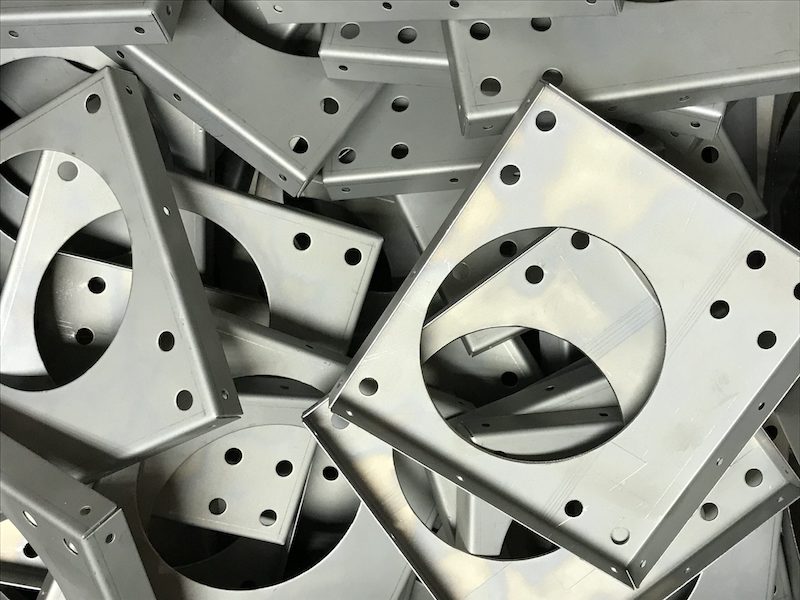
How to choose the sheet metal? It depends on the parts’ performance, cost, and manufacturability. If you have no ideas about which material best fits your application, TEAM MFG can help you with! Our engineering team can review your drawings and recommend the most suitable sheet metal based on:
· Sheet metal prototyping & production
· Carbon steel, stainless steel, aluminum, alloy steel, galvanized steel & tool steel
· Laser cutting, bending, welding, and finishing
· Support for both low-volume prototypes and mass production
· Engineering support based on customer drawings
· Post finish and assembly available.
Email: ericchen19872017@gmail.com
Website: https://www.team-mfg.com
Simply send us your drawings or specifications, and our engineering team will help you:
· Select the right sheet metal material
· Optimize design for manufacturability
· Control cost while meeting performance requirements
Contact TEAM MFG today to get expert advice and a fast quote for your sheet metal parts.
Besides from sheet metal fabrication, TEAM MFG also offers rapid prototoyping, injection molding, and CNC machining to meet your needs. In the past ten years, we helped lots of customers to launch their projects successfully.
The best choice is to balance performance, manufacturability, and cost. First of all, evaluating your part’s strength requirements, operating environment, forming needs, and budget, carbon or alloy steel is usually used for structural parts, while stainless steel or aluminum is for corrosion-resistant or hygienic applications.
Carbon steel!
It is the most widely used sheet metal due to its high strength, good weldability, wide availability, and low cost. People commonly used carbon steel for brackets, frames, enclosures, and structural components.
The purpose of making medical devices, food processing equipment, chemical environments, or outdoor applications in stainless steel is considering for corrosion resistance, cleanliness, or long service life.
Materials with high strength or special alloying elements are usually harder to weld. Low-carbon steel is the easiest to weld, while aluminum, alloy steel, and tool steel require more advanced welding processes and skilled fabrication.